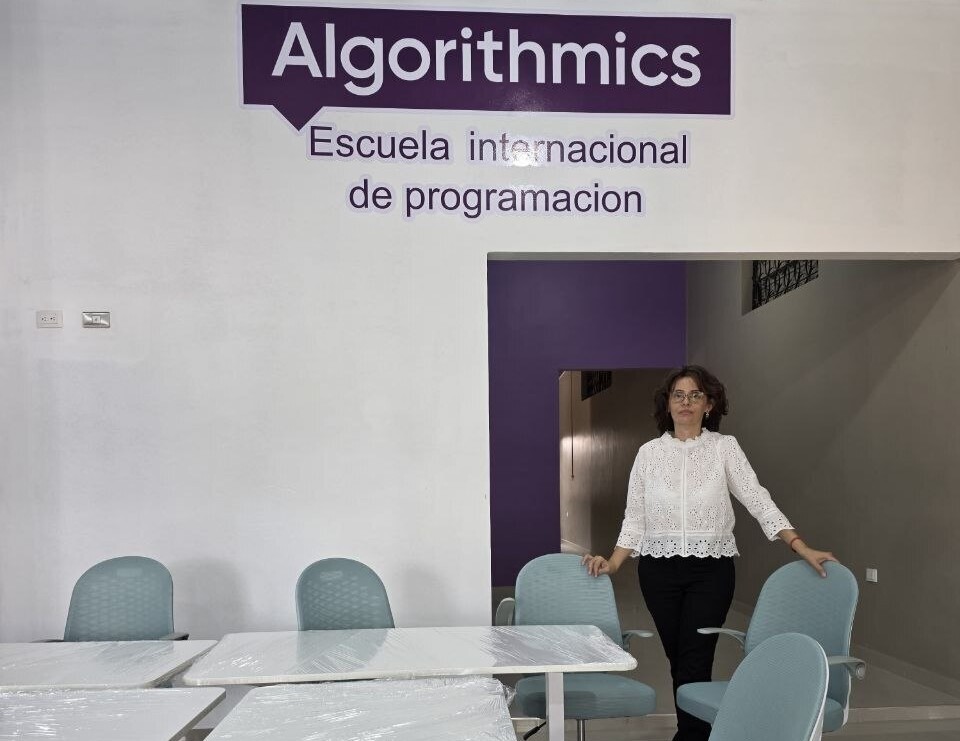
Claudia, the Algorithmics franchise partner in Catacamas, Olancho, Honduras, entered a market with zero competitors after months of research, choosing Algorithmics for its global presence and proprietary platform. A retail entrepreneur with no technical background, she built the school around her son's interest in programming—a firsthand account of finding real demand with no local supply.
Why this interview matters if you're evaluating an education franchise
Most franchise case studies come from large cities with crowded markets. This one does not.
Catacamas sits 210 kilometers northeast of Tegucigalpa, in Central America's largest municipality by land area. It's a regional hub for the Olancho Department, home to the Universidad Nacional de Agricultura, with a young, growing school-age population. What it lacks is a single specialized provider of coding and AI education for children.
That combination — real demand with no local supply — is the scenario most first-time franchise partners look for and rarely find. Below is a first-hand account of how one entrepreneur identified it, validated it, and committed.
It's worth reading closely if you're:
Catacamas sits 210 kilometers northeast of Tegucigalpa, in Central America's largest municipality by land area. It's a regional hub for the Olancho Department, home to the Universidad Nacional de Agricultura, with a young, growing school-age population. What it lacks is a single specialized provider of coding and AI education for children.
That combination — real demand with no local supply — is the scenario most first-time franchise partners look for and rarely find. Below is a first-hand account of how one entrepreneur identified it, validated it, and committed.
It's worth reading closely if you're:
- An education center owner considering adding a technology program to an existing student base
- A marketing agency owner with strong local lead-generation skills looking for a business you own rather than serve
- A corporate professional planning an exit from employment into something you control
- An IT specialist who wants to teach programming but doesn't want to build curriculum, platform, and methodology from scratch
Your background is in sales, not technology. What brought you into this world?
I've worked in sales and commerce since I was very young. Technology was not part of that world for me at first. About ten years ago, we decided to implement sales technology in our company. When I saw what it did for us—how much it improved our inventory management and how much faster our processes became—I understood that technology is a tool of enormous value.
That was the shift. I stopped seeing it as something technical that other people handle and started seeing it as what determines whether a business works.
Why this matters for prospective partners: A technical background is not a prerequisite for running an Algorithmics school. Commercial experience, local network, and operational discipline are the harder skills to teach. The franchisor provides the curriculum, platform, and teacher training.
That was the shift. I stopped seeing it as something technical that other people handle and started seeing it as what determines whether a business works.
Why this matters for prospective partners: A technical background is not a prerequisite for running an Algorithmics school. Commercial experience, local network, and operational discipline are the harder skills to teach. The franchisor provides the curriculum, platform, and teacher training.
There are many educational franchises available. What made you choose Algorithmics specifically?
I first learned about Algorithmics while I was in Tegucigalpa for a short time. My son studied there briefly, and then I had to leave the city.
After that, I started looking for more information and kept searching for several months. I read one thing and then another, reviewing everything in detail, because I already knew I could do it myself. What I liked about Algorithmics is that it has a global presence and its own platform. That's what makes it different from and superior to other technology schools.
Why this matters for prospective partners: The two factors she weighted most heavily — international footprint and a proprietary platform — are the two hardest things for a new education business to replicate independently. Anyone can license a syllabus. Very few can build and maintain a learning platform with automated progress tracking, teacher tooling, and parent visibility.
After that, I started looking for more information and kept searching for several months. I read one thing and then another, reviewing everything in detail, because I already knew I could do it myself. What I liked about Algorithmics is that it has a global presence and its own platform. That's what makes it different from and superior to other technology schools.
Why this matters for prospective partners: The two factors she weighted most heavily — international footprint and a proprietary platform — are the two hardest things for a new education business to replicate independently. Anyone can license a syllabus. Very few can build and maintain a learning platform with automated progress tracking, teacher tooling, and parent visibility.
How would you describe the local market for children's technology education in your area?
In this zone, no one provides this service. Nobody.
Just as my son enjoys video games and programming, many more children want to learn this. And I know their parents will be happy to add these courses to their children's education. I see great opportunities here.
Why this matters for prospective partners: Zero-competition markets are common in secondary cities across Latin America, MENA, and Southern Europe. They demand more market education in the first months—since parents may not yet know the category exists—and reward it with pricing power and near-total share of a growing segment.
Just as my son enjoys video games and programming, many more children want to learn this. And I know their parents will be happy to add these courses to their children's education. I see great opportunities here.
Why this matters for prospective partners: Zero-competition markets are common in secondary cities across Latin America, MENA, and Southern Europe. They demand more market education in the first months—since parents may not yet know the category exists—and reward it with pricing power and near-total share of a growing segment.
Did a previous experience make you see the need for this kind of education in your community?
I think good ideas come out of necessity.
In this technological era, we cannot wait for our children to grow up and reach university to learn things they could have learned much earlier. That's exactly what I felt when I looked around and saw that no education centers here offer these opportunities to children. The best time to learn is when children are of school age.
So I decided to take a step forward and open the doors of this new center so that all children have the chance to learn technologies that will be useful to them in adult life.
In this technological era, we cannot wait for our children to grow up and reach university to learn things they could have learned much earlier. That's exactly what I felt when I looked around and saw that no education centers here offer these opportunities to children. The best time to learn is when children are of school age.
So I decided to take a step forward and open the doors of this new center so that all children have the chance to learn technologies that will be useful to them in adult life.
Was there a specific person who influenced your decision to invest in this project?
Yes. My son Diego.
Diego has learning difficulties. Through our whole struggle to find different study methods for him, I realized something important: with these skills, I don't have to force him. It's something he actually likes, and he has always turned his attention toward programming.
He's very curious, and he doesn't limit himself to only playing video games — he wants to know how they're made so he can create his own. That made me decide even faster, and it means I get to fulfill my son's dream at the same time.
Why this matters for prospective partners: Project-based coding education engages children who struggle in conventional classroom formats, because the feedback loop is immediate. The output is something the child chose to build. Partners who understand this from personal experience tend to communicate it far more convincingly to parents than any brochure can.
Diego has learning difficulties. Through our whole struggle to find different study methods for him, I realized something important: with these skills, I don't have to force him. It's something he actually likes, and he has always turned his attention toward programming.
He's very curious, and he doesn't limit himself to only playing video games — he wants to know how they're made so he can create his own. That made me decide even faster, and it means I get to fulfill my son's dream at the same time.
Why this matters for prospective partners: Project-based coding education engages children who struggle in conventional classroom formats, because the feedback loop is immediate. The output is something the child chose to build. Partners who understand this from personal experience tend to communicate it far more convincingly to parents than any brochure can.
What connects you most to the philosophy and values of Algorithmics as a brand?
The same thing Algorithmics believes — that we should educate as many children as possible around the world and prepare them for the future.
It's not only about having a good business. It's about educating with values and preparing children for the future with the tools they need to succeed in life.
It's not only about having a good business. It's about educating with values and preparing children for the future with the tools they need to succeed in life.
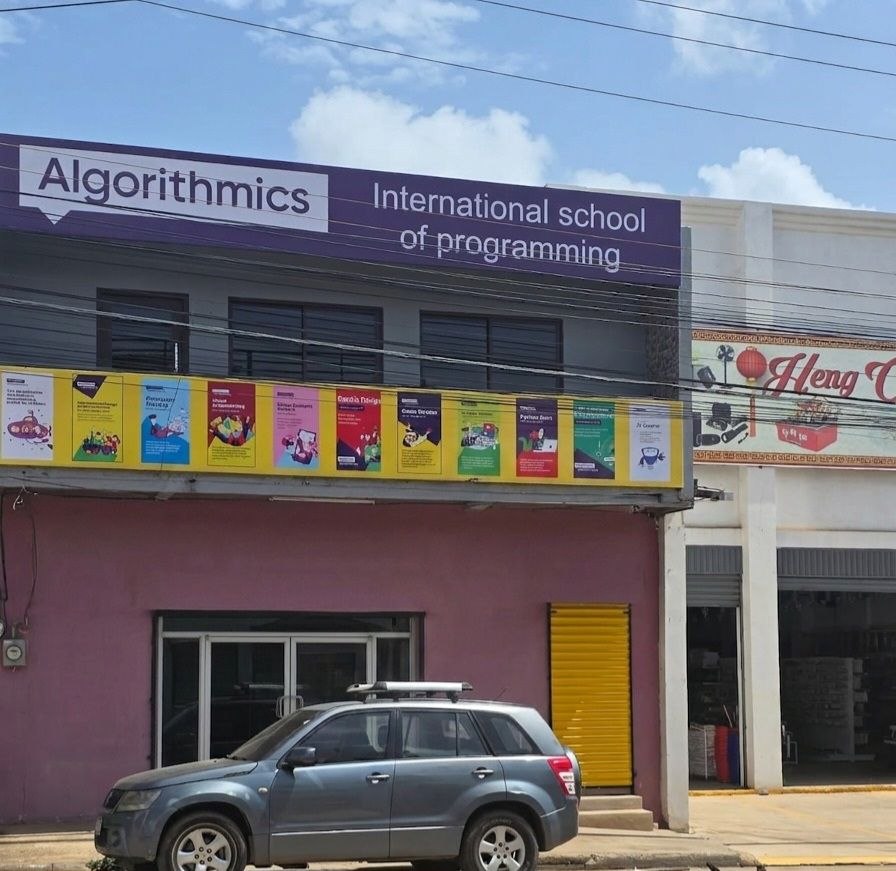
Five things this interview shows about opening a coding school
Non-technical founders succeed in this model. The partner brings 20 years of commercial experience and a local network, not a computer science degree. The franchisor supplies the technical layer.
The research phase matters more than the speed. Several months of independent comparison produced a decision she's confident in — which is what carries a partner through a slower-than-expected first quarter.
A proprietary platform is a real differentiator. Competing offers were rejected specifically because they lacked one. Parents notice the difference between a structured platform with visible progress tracking and a teacher improvising in a classroom.
Empty markets are opportunities, not warnings. No competition in a city of 63,000 with a large surrounding catchment means the first mover defines the category locally.
The strongest motivation is usually personal. Partners solving a problem they've lived—in this case, a son who learns differently—market the school with credibility you can't buy.
The research phase matters more than the speed. Several months of independent comparison produced a decision she's confident in — which is what carries a partner through a slower-than-expected first quarter.
A proprietary platform is a real differentiator. Competing offers were rejected specifically because they lacked one. Parents notice the difference between a structured platform with visible progress tracking and a teacher improvising in a classroom.
Empty markets are opportunities, not warnings. No competition in a city of 63,000 with a large surrounding catchment means the first mover defines the category locally.
The strongest motivation is usually personal. Partners solving a problem they've lived—in this case, a son who learns differently—market the school with credibility you can't buy.
Frequently asked questions
Do I need a programming background to open an Algorithmics franchise?
No. Partners come from sales, retail, marketing, corporate management, and education backgrounds far more often than from software engineering. Algorithmics provides the curriculum, learning platform, teacher recruitment and certification process, and operating playbook. The partner handles local sales, marketing, and school management. Algorithmics hires and trains technical staff after signing.
Can a coding school work in a small city with no existing competitors?
Yes — and often better than in a saturated capital. In a market with no incumbent, the first school defines the category and sets the price. The main additional work is market education: parents must first understand what coding and AI courses are and why they matter before they compare providers. Franchisors typically supply the campaign templates and parent-facing materials for exactly this phase.
What made this partner choose Algorithmics over other education franchises?
Two factors decided it: presence in more than 90 countries and a proprietary learning platform rather than a licensed third-party syllabus. She spent several months comparing options in detail before concluding that the combination of global scale and owned technology made Algorithmics stronger than the alternatives she reviewed.
Is coding education suitable for children with learning difficulties?
Frequently, yes. Project-based programming gives immediate, visible feedback, lets children work at their own pace, and connects directly to something many already care about—video games. Children who disengage in traditional lecture formats often engage strongly when the task is building something they chose. This partner's decision to open her school was driven directly by watching this happen with her own son.
How long does it take to decide on an education franchise?
This partner took several months of independent research before committing. That's typical and healthy. The realistic sequence is initial contact, reviewing the financial model for your specific city, talking with existing partners, analyzing the territory, and then signing. Most partners who move faster already own an education business and are adding a program.
What kind of professional profile best fits an Algorithmics franchise?
Four profiles recur across the network: owners of existing education centers adding a technology vertical; marketing and agency professionals who can generate local demand; corporate employees transitioning to business ownership; and IT specialists who want to teach without building a methodology from scratch. They share comfort with local sales and a willingness to follow an operating system rather than reinvent it.
If you recognise your own situation in this interview
Catacamas is one of more than 500 Algorithmics locations across 90+ countries. Many of them started exactly here: a city with no provider, a founder with commercial experience and no technical background, and a personal reason to care about how children learn.
If you want to see what the numbers look like in your own city, request the financial model for your market. It's built on real enrolment curves from operating schools, calibrated to local salary, rent, and pricing levels, with a break-even student count specific to your territory.
If you want to see what the numbers look like in your own city, request the financial model for your market. It's built on real enrolment curves from operating schools, calibrated to local salary, rent, and pricing levels, with a break-even student count specific to your territory.