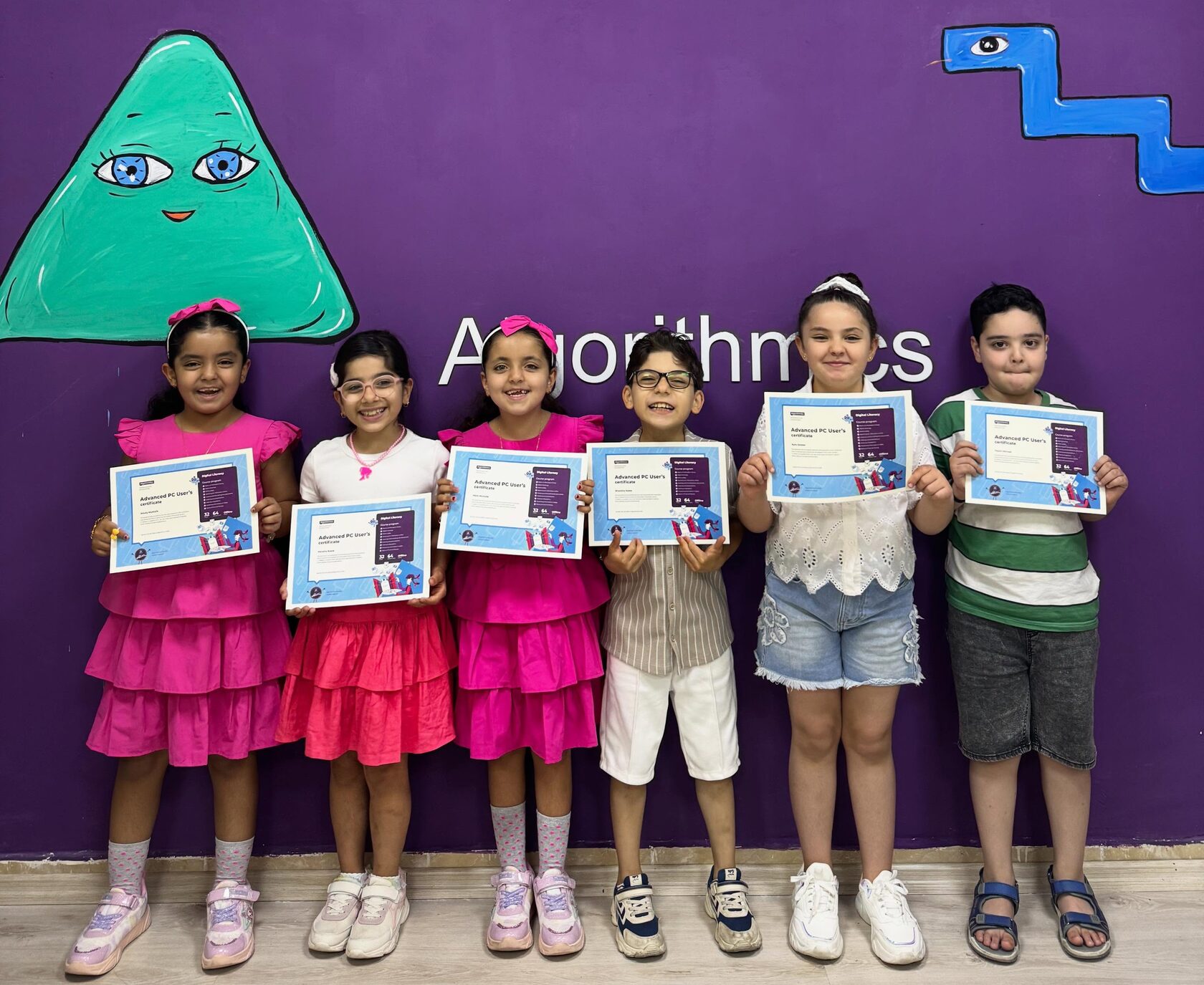
A coding summer camp is one of the strongest enrollment funnels a school can run, because campers who enjoy the experience convert into full-year students at a high rate. A franchise partner in Erbil, Iraq ran two summer camp groups and turned them into their most powerful driver of academic-year enrollment. The four lessons below — treat the camp as a pipeline, split groups by age, use the camp as a low-pressure trial, and start planning two months early — are what made it work.
Most schools treat a summer camp as a standalone product: run it, earn some revenue over the break, move on. The partners who get the most out of it treat it as something else entirely — the top of their enrollment funnel for the whole academic year. Here is how one Algorithmics franchise partner in Erbil, Iraq, did exactly that, and the four takeaways any coding school can apply.
Why are summer camps the best enrollment funnel for a coding school?
Because most campers convert into full-year students, the summer camp wasn't a side project for the Erbil partner—it was their best conversion funnel into academic-year enrollment. A child who spends a camp session enjoying coding, finishing projects, and building confidence is already halfway to signing up for the full year.
This works because of the order of the decision. In a cold sale, a parent has to commit to a full year of an unfamiliar program before seeing whether their child likes it. A camp reverses that: the child tries it first, has a good experience, and then the parent is asked to continue. You are no longer selling a promise — you are extending something that already worked.
What to do with this:
This works because of the order of the decision. In a cold sale, a parent has to commit to a full year of an unfamiliar program before seeing whether their child likes it. A camp reverses that: the child tries it first, has a good experience, and then the parent is asked to continue. You are no longer selling a promise — you are extending something that already worked.
What to do with this:
- Design the camp so the last day naturally points to the full-year program, not as a hard pitch but as an obvious next step.
- Capture parent contact details at sign-up and stay in touch through the camp, so the enrollment conversation happens while enthusiasm is high.
- Track how many campers convert to full-year students. This number tells you whether your camp is a funnel or just a break-time activity.
How should you structure camp groups by age?
Run separate Junior and Senior tracks. The Erbil partner made their camp attractive to a wider range of families by splitting it into age-inclusive groups rather than teaching one mixed cohort.
The reason is both educational and commercial. A single group spanning young children and teenagers forces you to pitch the content at a compromise level that fits neither well. Separate tracks let each group work at the right pace and difficulty, which produces better results and happier parents — and happier parents are the ones who enroll for the full year.
Commercially, age-segmented tracks also widen your market. A family with two children of different ages can enroll both. A parent of a teenager who assumed "coding camp" meant something for little kids sees a Senior track and reconsiders. One camp, structured into two tracks, sells to more households than one undifferentiated group.
The reason is both educational and commercial. A single group spanning young children and teenagers forces you to pitch the content at a compromise level that fits neither well. Separate tracks let each group work at the right pace and difficulty, which produces better results and happier parents — and happier parents are the ones who enroll for the full year.
Commercially, age-segmented tracks also widen your market. A family with two children of different ages can enroll both. A parent of a teenager who assumed "coding camp" meant something for little kids sees a Senior track and reconsiders. One camp, structured into two tracks, sells to more households than one undifferentiated group.
How does a summer camp build parent confidence?
A low-pressure trial that lets parents see the results for themselves. The Erbil partner's third lesson: a camp lowers the barrier to entry. Seeing their own child enjoy coding is what makes full-year enrollment feel like a natural next step rather than a leap of faith.
Parents rarely hesitate because they doubt coding is valuable. They hesitate because they cannot tell, in advance, whether their child will engage with this program. A camp answers that question with evidence instead of marketing. The child comes home talking about the game they built, and the decision makes itself.
To maximize this effect:
Parents rarely hesitate because they doubt coding is valuable. They hesitate because they cannot tell, in advance, whether their child will engage with this program. A camp answers that question with evidence instead of marketing. The child comes home talking about the game they built, and the decision makes itself.
To maximize this effect:
- Make sure every camper produces something visible — a game, a project, a demo they can show a parent. Visible output is your most persuasive conversion asset.
- Invite parents to a short showcase at the end of the camp. Watching their child present is more convincing than any brochure.
- Keep the camp genuinely enjoyable. Enjoyment is not a nice-to-have here; it is the mechanism that converts.
When should you start planning a summer camp?
Start at least two months early. The Erbil partner's fourth takeaway is operational: early preparation for marketing, scheduling, and venue setup prevents the last-minute scrambles that undermine a camp before it begins.
Two months of lead time is what lets you fill the camp rather than launch it half-empty. It gives your marketing enough runway to reach parents while they are still planning their summer, lets you lock in a venue before demand peaks, and leaves room to adjust the schedule around what families actually sign up for.
A camp planned two weeks out runs on whoever happened to hear about it in time. A camp planned two months out is a camp you can actually fill — and a full camp is a bigger funnel into the academic year.
Two months of lead time is what lets you fill the camp rather than launch it half-empty. It gives your marketing enough runway to reach parents while they are still planning their summer, lets you lock in a venue before demand peaks, and leaves room to adjust the schedule around what families actually sign up for.
A camp planned two weeks out runs on whoever happened to hear about it in time. A camp planned two months out is a camp you can actually fill — and a full camp is a bigger funnel into the academic year.
The summer camp checklist
Two months before
- Start marketing early, while parents are still planning their summer.
- Book and set up your venue before demand peaks.
- Design separate Junior and Senior tracks so you can sell to a wider range of families.
During the camp
- Make sure every camper builds something visible they can show a parent.
- Capture parent contact details and stay in touch throughout.
- Run an end-of-camp showcase, so parents see the result for themselves.
After the camp
- Present full-year enrollment as the natural next step, while enthusiasm is high.
- Track your camp-to-full-year conversion rate — this is the number that proves the funnel works.
Frequently asked questions
Are summer camps a good way to enroll coding students?
Yes — for many schools, they are the single best enrollment funnel. Campers who have a good experience convert into full-year students at a high rate, because the child has already tried the program before the parent commits to a full year. The Algorithmics partner in Erbil, Iraq, used summer camps as their strongest driver of academic-year enrollment.
Should a coding camp separate students by age?
Yes. Running separate Junior and Senior tracks lets each group work at the right level, produces better outcomes, and broadens your market—families with children of different ages can enroll more than one child, and parents of teenagers are more likely to sign up when they see a track built for that age.
How far in advance should you plan a summer camp?
At least two months. Early preparation for marketing, scheduling, and venue setup helps you fill the camp instead of running it half-empty and avoids the last-minute scrambles that undermine turnout.
How do summer camps convert into full-year enrollments?
A camp is a low-pressure trial. Instead of asking a parent to commit to a year of an unfamiliar program, it lets the child try coding first. When the parent sees their own child enjoying it and showing off what they built, full-year enrollment feels like a natural continuation rather than a risk.
What makes a summer camp convert well?
Visible student output that children can show their parents, an end-of-camp showcase, age-appropriate tracks, contact with parents throughout the camp, and a clear, low-pressure path from the camp into the full-year program.
Once your summer campers convert into full-year students, the next challenge is scaling enrollment across the whole year. See the founder's playbook: How to Get Your First 100 Students at a Coding School.